Starting your digitization journey: What to scan and why
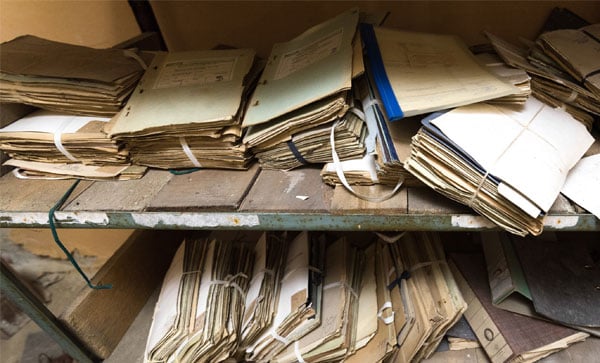
office shelf of files

Deciding where to begin your digitization journey can feel overwhelming. You have years of information stored in filing cabinets, store rooms, and offices, but not all of it needs to be scanned today. The first step is identifying the documents that, once digital, will deliver the most value to your business.

We help you transform your physical information into secure, accessible digital assets–and then make them intelligent by structuring the data and enriching it with metadata using intelligent document processing (IDP). This guide explains why scanning is a critical first step and which documents and media are the best place to start.


Explore digitization with InSight DXP

Document Recovery Services -Old Documents | Iron Mountain
Business workers in meeting
Files and folders
Paper files unsecure standing on desks

Strategic triage: You don't need to digitize everything

A common misconception is that digital transformation requires an immediate, total backlog conversion. In reality, being future-ready means exercising fiscal responsibility through selective modernization.

By using Iron Mountain Smart Suite, our portfolio of technology-enabled services for legacy records, we help you audit your physical inventory to determine what to scan, what to store, and what to defensibly destroy. On average, organizations report that only about 42% of boxes containing paper records actually require digitization.1 The rest can be securely stored or destroyed depending on your obligations, helping you reclaim costs and stop paying to manage records you no longer need.

How the transformation works

Our process is designed to bridge the gap between your physical and digital assets with a secure, end-to-end chain of custody.

Drag to see each step

What can be transformed?Files and folders

A comprehensive digitization partner can modernize almost any physical asset your organization holds.

Digitizing core operational information provides the most immediate impact on daily efficiency.

  • Standard paper files: Scanning correspondence, project files, and departmental records makes day-to-day information retrieval instant.
  • Handwritten documents: Intelligent capture extracts critical data from notes, registration forms, and applications, making previously “unusable”unstructured data functional.
  • Physical mail: A digital mail solution scans and routes incoming mail to the correct digital workflows, eliminating paper-based bottlenecks from day one.
  • Human Resources (HR) documents: Employee records, payroll files, and benefits contain highly sensitive information that requires meticulous care. Digitizing these assets fortifies data security and simplifies compliance audits while empowering HR teams with secure, remote access to the files they need, regardless of their location.
  • Financial & legal records: Invoices, tax records, contracts, and wills form the backbone of your organization's accountability. Transitioning these to a digital format creates a searchable, auditable archive that protects your most critical agreements and board minutes from physical loss or degradation.
  • Healthcare & life sciences: Patient medical records, physician notes, lab reports, X-rays, and pathology slides represent the critical pulse of patient care. Transitioning these records to a digital format facilitates seamless interoperability across care teams and fortifies patient data security in alignment with HIPAA standards. Beyond administrative efficiency, digitization empowers clinical research by transforming static files into accessible data sets that can fuel medical innovation and improve patient outcomes.
  • Government & public sector: Vital records—including birth and death certificates, property deeds, and vehicle registrations—serve as the foundational evidence of a functioning society. By transitioning these legacy archives to a digital format, agencies safeguard historical continuity and modernize the constituent experience. This transformation allows residents to access essential documents on demand, reducing administrative wait times and providing that the public record remains resilient against the passage of time.
  • Energy: Technical specifications, engineering diagrams, installation documentation, and site procedures are vital for operations and safety. Digital access provides teams with the correct versions.
  • Finance & mortgage: Loan applications, tax documents, appraisals, pay stubs, and property titles create massive paper files. Digitization speeds up loan processing and simplifies audit responses.

Valuable information isn't limited to paper; media and special collections often hold historical and proprietary data that can be unlocked. Modernizing these formats allows you to recover legacy insights that fuel custom AI models and uphold your organization’s institutional memory.

  • Film-based media: Microfilm, microfiche, and aperture cards—once the standard for long-term archiving—are prone to degradation over time. Transitioning these formats into stable, searchable digital files prevents the loss of historical records and facilitates immediate access to archived data.
  • Tape: Magnetic formats, including data and backup tapes, can be digitized to recover legacy information and consolidate fragmented archives into modern, cloud-based environments.
  • Bound & large-format: Bound books, oversized architectural plans, maps, and newspapers require specialized handling to scan without damage. High-resolution imaging preserves the integrity of these large-scale assets for digital research and collaboration.
  • Audiovisual (AV) & other media: Nearly all AV formats—from audio and video tapes (like VHS) to CDs and DVDs—can be digitized to preserve corporate history, training materials, and media assets.
  • Special collections: Unique assets like manuscripts, letters, photographs, negatives, and even 3D objects like artwork can be captured with high-resolution imaging for preservation and digital access. This process supports long-term preservation while facilitating global digital access to one-of-a-kind collections.

A holistic transformation journey

Digitization is the bridge between your physical past and digital future. This transformation strengthens organizational resilience across several key pillars:
AI

Cognitive capability

Converting documents into structured information makes your data AI-ready, empowering it to fuel advanced analytics and machine learning.
price in format of bill

Fiscal responsibility

Reclaiming the high costs of physical storage is possible by identifying exactly what to scan, store, or securely destroy—allowing you to stop paying for the management of records you no longer need.
cog wheels

Operational agility

Automating document-centric processes eliminates manual bottlenecks and frees your workforce to focus on strategic, high-value initiatives.
digitize 2

Information intelligence

Unlocking valuable insights trapped in physical documents allows you to identify trends, enhance customer experience, and make faster, more informed business decisions.
safety and security

Fortified security

Storing information in a centralized, cloud-based repository facilitates effective data management and protects against cyber threats.
Businessman with glasses

Why Iron Mountain?

For over 70 years, organizations have trusted Iron Mountain to protect and manage their most valuable assets. We are more than a vendor; we are your strategic partner, and we speak from a place of experience and empathy. We understand the complexities of information management, security, and compliance. Our proven processes, secure chain of custody, and advanced technology protect your information at every step. We help you build organizational resilience, bridging the gap between your physical and digital assets to unlock their full value.

1 Survey of Records and Information Management Professionals, conducted via a third-party provider, April 2022

We're here to help.

paper and pen

Contact us

Fill out this form and an Iron Mountain specialist will contact you within one business day.
Get a quote
laptop profile screen

Login and bill pay

Log in to your account or learn how to create one.
Get started
customer service

Support center

Our Customer Support Center can help provide you with the quickest answers to your questions.
Get support
ringing telephone

Call sales

Connect with one of our knowledgeable representatives to address your specific solution needs.
800 - 899 - 4766